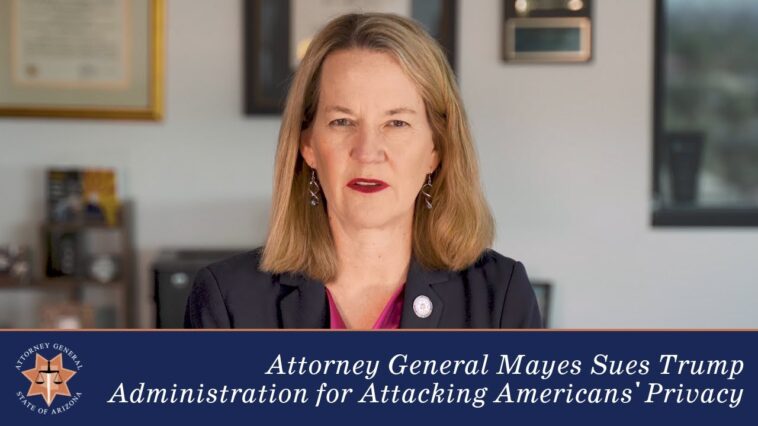

Arizona Attorney General Kris Mayes Fights Back Against Unlawful Data Demands
In a move that has all eyes fixed on the delicate balance between privacy rights and federal oversight, Attorney General Kris Mayes of Arizona, along with a coalition of 21 state attorneys general, has initiated legal action against the Trump administration. The suit challenges an unprecedented demand by the U.S. Department of Agriculture (USDA) that would force states to hand over vast troves of personal and sensitive information about Supplemental Nutrition Assistance Program (SNAP) recipients. This legal battle is emerging as a critical test of constitutional protections and a state’s right to safeguard its residents’ private data.
The issue centers on the USDA’s insistence that states supply detailed personal records—including social security numbers, home addresses, and other identifying data—of SNAP applicants and recipients spanning several years. Such data, collected as part of an essential food assistance program, has long been kept confidential under both longstanding state practices and federal laws. The federal agency’s push for this information has raised serious questions about the use of personal data for purposes beyond the program’s intended scope.
Understanding the Controversial Federal Data Request
At the heart of this legal dispute is the claim that the USDA’s demand represents not only overreach but also a violation of multiple federal privacy laws and the U.S. Constitution. The Trump administration has made it clear that it views personal data as a tool to advance its policy objectives. However, critics argue that these measures are not designed to fight fraud, as claimed, but rather to intimidate vulnerable families by linking their access to critical government assistance with potentially invasive data-sharing conditions.
State officials and legal experts have pointed out that SNAP data is governed by a long-standing framework of privacy protections. For over six decades, states like Arizona have administered SNAP by maintaining strict controls on how personal information is used and shared. The current lawsuit challenges the idea that the federal government can coerce states into loosening these controls by threatening to withhold essential funding—a tactic deemed to be both coercive and without legal precedent.
Legal Analysis: Federal Privacy Laws in the Spotlight
This case is not just about a disagreement over data; it is a broader challenge to the limits of federal authority over state-administered programs. The coalition argues that the USDA’s demand violates several key federal laws designed to protect personal privacy. Critics of the USDA’s approach contend that the data collection effort is a classic example of how personal information can be weaponized by a federal authority, using financial pressure to extract data from states.
One of the primary concerns is how the USDA’s demand conflicts with established legal restrictions. Over the years, significant legal safeguards have been established to ensure that data provided for the administration of programs like SNAP is not exploited for other purposes. The current legal challenge contends that these safeguards are being ignored. Essentially, the argument is that the Senate-approved statute and precedent set by both state and federal law were intended to protect sensitive information—not to create a de facto surveillance database of low-income families.
Moreover, experts have warned that the method employed by the USDA—threatening to cut funding if states fail to comply—constitutes an abuse of administrative power. This tactic forces state officials into a no-win scenario: either risk the privacy of their residents or face disruptions in a program that millions depend on for their daily sustenance. In a sense, the legal challenge is an attempt to protect citizens from being caught in the crossfire of a politicized data collection effort.
Constitutional Implications and the Spending Clause
The lawsuit further contends that the USDA’s demands breach the Spending Clause of the U.S. Constitution. This clause, a cornerstone of federalism, is intended to limit the federal government’s ability to dictate state policies through funding mechanisms. By conditioning SNAP funding on compliance with controversial data-sharing requirements, the administration is seen by opponents as overstepping its regulatory boundaries.
Legal scholars argue that this approach rewards coercion with cash, turning a critical social support program into a bargaining chip in a broader political strategy. The notion that states must trade the privacy rights of their citizens for federal dollars raises fundamental questions about the nature of state autonomy and the proper roles of federal and state governments. If the court rules in favor of Arizona and its coalition partners, it could set a powerful precedent that reinforces the necessity of maintaining strict limits on the federal government’s ability to use as leverage critical public services.
Examining the History of SNAP and State-Federal Collaboration
For more than 60 years, SNAP has stood as an essential safety net designed to help low-income families put food on the table. Administered by states under federal guidelines, the program’s success depends on a sophisticated system of checks and balances intended to ensure that benefits reach only those who are eligible. Throughout this time, a cooperative relationship between state agencies and the USDA has resulted in one of the most stringent quality control systems in the federal government.
Historically, states have taken great care in handling SNAP data, compiling records with the understanding that this information would not be misused or shared without specific, legally defined exceptions. This careful stewardship of personal data has built trust between citizens and the government agencies responsible for administering these programs. The unprecedented data demand by the USDA, however, represents a stark departure from this tradition.
What makes this situation particularly alarming are the broader implications for both state-federal relations and the administration of critical public services. In demanding sensitive data on a massive scale—data that includes records from up to five years in the past—the federal government is effectively erasing decades of established practices designed to protect individual privacy.
Data Privacy Risks in the Current Political Climate
The controversy surrounding the USDA’s request must also be viewed in light of growing concerns about data privacy in America. In an era where personal data is increasingly targeted by both public and private entities, the notion that the federal government could compile an expansive database of Americans’ private information without meaningful restrictions is deeply troubling.
Critics have pointed out several key issues that make this data collection effort particularly risky:
- Lack of clear limitations: There are minimal constraints on how the data could be used once collected.
- Potential for abuse: Similar to other federal agencies, if sensitive data falls into the wrong hands, it could be used for purposes extending far beyond fraud prevention.
- Chilling effects: The threat of having one’s personal information broadly shared might discourage eligible citizens from applying for vital assistance programs.
These points underscore the need for states to protect the privacy of their residents, even in situations where federal funding and administrative pressures are at play. Indeed, the broader debate brings into focus whether personal data should ever be used as a tool for political maneuvering, especially when it affects the lives of millions of citizens who are already vulnerable.
Implications for Vulnerable Families and Public Trust
At its core, the legal battle spearheaded by Attorney General Mayes is about protecting the trust that the public places in government institutions. Many SNAP recipients, already burdened by economic hardship, signed up for the program with the assurance that their personal information would be handled with the utmost care and used solely for verifying eligibility and preventing fraud. Any deviation from this established norm risks not only violating privacy rights but also undermining public confidence in a system designed to offer support in times of need.
The potential consequences of this case extend far beyond the immediate legal challenge. If the federal government were allowed to exercise unchecked power over state data, the ripple effects could include:
- Erosion of trust: Citizens might lose faith in government institutions’ ability to protect their privacy.
- Deterrence from applying for benefits: Families could be reluctant to access programs essential to their well-being.
- Precedents for future data demands: A legal victory for the USDA might pave the way for similar actions in other areas of public policy.
This issue is particularly pressing when one considers the high stakes for vulnerable populations. For many, SNAP benefits represent a lifeline, and any threat to these services could result in severe economic fallout. The potential for unintended consequences is high, and policymakers are now grappling with the question of how best to balance the imperatives of fraud prevention against the equally important need to protect individual privacy.
How Politicized Data Collection Harms Public Assistance Programs
One of the most contentious aspects of the dispute is how federal policies can be influenced by political agendas—a point underscored by the Trump administration’s role in this situation. According to public reports, since President Trump’s return to the White House, there has been a concerted effort among federal agencies to amass enormous databases of personal information from a variety of sources. These databases, collected under claims of preventing fraud and abuse, have raised alarm bells among privacy advocates and state officials alike.
The USDA’s push for SNAP data falls into a broader strategy that includes similar moves by other agencies such as the Department of Homeland Security. For instance, there have been reports of large data collections involving personal details from both the Internal Revenue Service and the U.S. Health and Human Services Agency. Such actions, as argued by states like Arizona, suggest a dangerous trend: the use of personal data as a lever to support broader, and often undisclosed, political objectives.
This environment of suspicion and fear complicates the public’s relationship with government programs. Here are some of the more tangible effects observed in today’s data-driven political landscape:
- Intimidation tactics: Sensitive information is used to pressure states into compliance with federal desires that are not directly tied to the administration of public programs.
- Policy manipulation: Funding for critical programs becomes conditional, potentially compromising the independence of state-run initiatives.
- Public skepticism: Citizens may grow wary of applying for benefits if they fear that their personal information is not safe.
The combination of political pressure and aggressive data collection not only endangers the privacy of millions of individuals but also threatens to fundamentally alter the way public assistance programs function. It is a slippery slope that could eventually lead to further federal encroachments on state authority and individual privacy.
Federal Funding, Coercion, and the Right to Privacy
One of the most pressing questions arising from this legal dispute is the financial leverage wielded by the federal government. Each year, the USDA provides states with essential funding to administer SNAP—a program that supports tens of millions of low-income families. However, the threat of withholding these funds if states refuse to comply with data-sharing demands creates an untenable pressure point.
State agencies are forced to make a difficult decision: either sacrifice the privacy of their residents or risk losing a crucial stream of funding that keeps millions from going hungry. This kind of coercion is seen by many as fundamentally incompatible with the principles of federalism and the constitutional protection of individual rights.
To better understand the mechanics at work, it helps to consider a simple table that outlines the contrasting approaches to data handling within SNAP:
| Aspect | Traditional SNAP Data Handling | USDA’s Proposed Approach |
|---|---|---|
| Data Collection | Limited, program-specific data collected under strict privacy guidelines | Comprehensive data collection including social security numbers, home addresses, and multi-year records |
| Data Use | Restricted to verifying eligibility and preventing fraud within clearly defined guidelines | Potentially used for additional, unspecified purposes beyond the program’s scope |
| Funding Conditions | Stable funding delivered without coercive data-sharing mandates | Federal funding tied to compliance with far-reaching data requests |
This table encapsulates the tension between trying to uphold long-established privacy protections and the federal government’s growing appetite for data. Clearly, the proposed shift in policy represents not just a bureaucratic change, but a fundamental alteration in the relationship between states and the federal government.
Protecting Constitutional Balance and the Essential Nature of Public Programs
At their core, the arguments advanced by Attorney General Mayes and the coalition are rooted in preserving the delicate constitutional balance between federal power and state sovereignty. The requirement to share sensitive data as a condition for receiving federal funds raises serious constitutional questions. If the courts decide in favor of the state coalition, it could reaffirm the importance of the Spending Clause as a bulwark against administrative overreach.
Conversely, a ruling against the states might embolden the federal government to impose similar data collection measures across a range of public programs, further eroding the privacy and autonomy of state-run initiatives. The stakes could not be higher, as the outcome of this case will likely chart the course for how personal data is treated in an era of ever-expanding governmental authority.
The case is emblematic of many other legal battles being waged today over data privacy. As technology advances and data becomes an increasingly valuable commodity, the pressure to re-examine existing legal frameworks grows ever more intense. Balancing the need to prevent fraud and abuse with the imperatives of protecting individual privacy is a challenging path that involves many tricky parts and tangled issues. It’s a legal landscape riddled with tension where every decision has lasting consequences for public trust and individual liberty.
Challenging Unconstitutional Data Practices: A Call for Reform
The action taken by Attorney General Mayes is not simply a reactive measure to a single policy; it is part of a broader movement aimed at asserting citizens’ rights in the digital age. The legal challenge stands as a protest against the notion that personal data can be repurposed for political gain—even if the stated aims are to combat fraud and abuse. The core of the argument is that once government agencies start stretching the intended uses of personal data, it paves the way for further intrusions into private life.
This case therefore calls for wider reforms in how data is handled by both state and federal agencies. Several areas merit careful consideration and potential legislative intervention:
- Clear guidelines for data collection: Establishing unambiguous rules on what data can be collected and under what conditions is essential.
- Restrictions on data use: The purposes for which sensitive personal information can be employed should be narrowly defined and strictly enforced.
- Enhanced oversight: An independent body could be tasked with monitoring data requests and ensuring that privacy rights are never compromised for political purposes.
These potential reforms are not merely legal technicalities; they represent key steps in ensuring that as technology and data usage evolve, individual rights remain super important and shielded from political manipulation. Without such protections, vulnerable populations—those who rely on programs like SNAP—could find themselves increasingly exposed to risks that extend well beyond fraud prevention.
The Importance of Maintaining Trust Between States and Citizens
One of the most critical issues at stake in this dispute is the trust between state governments and their citizens. For decades, SNAP recipients have been assured that the sensitive information they provide will be kept confidential and used only for verifying eligibility and preventing abuse. This assurance is a cornerstone of why families feel safe accessing the program.
When government agencies begin to treat personal data as a tool to achieve broader political objectives, that trust is broken. The potential fallout includes:
- Reluctance to participate in public assistance programs: Families might opt out of essential services if they believe their privacy is at risk.
- Skepticism toward government communications: Public faith in the fairness and integrity of state-run programs could be undermined.
- Long-term damage to public institutions: The erosion of trust might have ripple effects, making it harder for states to implement reforms or introduce new initiatives in the future.
Ultimately, the case underscores a broader question about how government agencies should interact with citizens’ data in an era where privacy is increasingly fragile. It is a discussion that is not merely academic but has real-world implications for those who depend on public assistance and for the overall health of democratic governance.
Future Outlook: What This Legal Battle Might Mean for States and the Federal Government
The outcome of this lawsuit will have repercussions that extend far beyond the borders of Arizona. A ruling in favor of the states could not only curtail the current data request but also serve as a benchmark for future disputes over privacy and federal funding. For states and policymakers alike, this case is a stark reminder of the importance of defending privacy rights against overzealous administrative measures.
Should the court side with Attorney General Mayes and the coalition, it would reinforce several key principles:
- State Sovereignty: States maintain a critical role in protecting the privacy rights of their citizens, especially when federal pressure mounts.
- Limits on Federal Overreach: The federal government cannot simply redefine the boundaries of its authority by attaching coercive conditions to essential funding.
- Protection of Vulnerable Populations: Safeguarding personal data is paramount in maintaining public trust, particularly among the most vulnerable groups who rely on public assistance.
On the other hand, a ruling in favor of the federal government could signal a shift in how data is managed across the country. It might embolden federal agencies to place similar coercive conditions on states in other areas, potentially leading to a future where sensitive personal data is routinely shared across various government platforms without adequate oversight. Such a scenario would not only undermine longstanding privacy protections but could also have unforeseen, far-reaching consequences for state-federal relations.
For legislators and policymakers, this case serves as a wake-up call. As the digital age continues to redefine how personal data is collected and used, safeguarding the privacy of citizens must remain at the forefront of policy discussions. There is an urgent need to update or amend existing regulations to provide clarity, set new boundaries, and ensure that both state and federal agencies operate within a framework that respects individual rights while effectively administering public programs.
Policy Recommendations for Protecting SNAP Data Privacy
In light of these developments, several policy recommendations have emerged from experts and state officials alike. These recommendations aim to strike a balance between preventing fraud and preserving the privacy rights of individuals:
- Legislative clarity: Congress should consider revising the statutes governing data collection for SNAP and similar programs to explicitly limit data sharing to purposes directly related to program administration.
- Independent oversight: Establish an independent oversight committee to monitor and audit data requests from federal agencies, ensuring that such requests remain within the confines of legal and constitutional boundaries.
- Enhanced transparency: Mandate detailed public reports from federal agencies outlining how collected data is used, who has access to it, and what measures are in place to protect personal privacy.
- Stronger enforcement mechanisms: Implement stringent penalties for any misuse or unauthorized sharing of sensitive data, with a clear legal pathway for recourse by affected states and individuals.
These steps, while not a panacea, represent a move toward safeguarding the personal information of vulnerable populations and preserving a balance of power that respects both state and federal jurisdictions. In a time when data is increasingly viewed as a strategic asset, such reforms are super important not only for protecting privacy but also for upholding the trust that underpins social support programs like SNAP.
Conclusion: A Critical Moment for Privacy and Federal-State Relations
The legal challenge mounted by Attorney General Kris Mayes is a critical moment in the ongoing debate over how personal data is managed in the United States. It brings into focus the tricky parts and tangled issues that arise when federal authorities seek to leverage crucial public funding for broader political ends. At its core, this case is about more than just data—it is about protecting the constitutional rights of citizens, safeguarding the privacy of millions of low-income families, and upholding the integrity of long-standing state-federal relationships.
While the federal government maintains that its objective is to prevent fraud and abuse within SNAP, the reality is that its approach threatens to turn sensitive personal data into a bargaining chip with far-reaching consequences. The prospect of compromising the very privacy that is promised to each applicant and recipient strikes at the heart of a system built on trust and mutual responsibility. As states come together to challenge this practice, it sends a clear message that personal privacy must not be sacrificed for political expediency.
In the coming months and possibly years, the outcome of this lawsuit could redefine the limits of federal power in relation to state-administered programs. It will test whether long-held agreements on data privacy can withstand pressures from a politically charged federal agenda. For the millions who depend on SNAP and the countless families whose personal data is at risk, the stakes are enormously high. A ruling that favors state protections could encourage other states to resist similar coercive measures, ultimately leading to stronger, clearer guidelines that prioritize the privacy rights of individuals above short-term political gain.
As the legal battle proceeds, states and citizens alike will be watching closely, recognizing that the decisions made here may well have implications far beyond the immediate case. Whether one views the federal data demands as a necessary tool for fraud prevention or as an overreach into private lives, there is common ground in the need for responsible, transparent governance—one that fully respects both the constitutional rights of individuals and the autonomy of states in administering vital public programs.
The discussion sparked by this lawsuit extends into broader questions about the role of government in the digital age. As technology opens new opportunities for data collection and analysis, society must confront the nerve-racking challenges posed by rapid innovation while remaining vigilant against the misuse of personal information. Striking a balance between innovation and privacy, federal oversight and state autonomy, will require continued dialogue, legal scrutiny, and most importantly, an unwavering commitment to the principles of individual liberty and social justice.
Ultimately, the outcome of this case will not only determine the course for SNAP and similar programs but may also serve as a pivotal benchmark for privacy rights in America. As we move forward, it is essential that all parties—government officials, policymakers, legal experts, and citizens—work together to ensure that legal and administrative practices evolve in a manner that both embraces technological progress and steadfastly protects the privacy and trust of every American.
Originally Post From https://www.azag.gov/press-release/attorney-general-mayes-sues-trump-administration-illegal-demands-states-hand-over
Read more about this topic at
The Unintended Consequences of Policy and Data …
New Bulk Data Rules: A Worthy Policy Goal, Executive …